

E20 Fuel Controversy: Essential Guide to Engine Safety, Mileage Issues and Kejriwal’s Protest 2026
E20 Fuel Controversy: Essential Guide to Engine Safety, Mileage Issues and Kejriwal’s Protest 2026
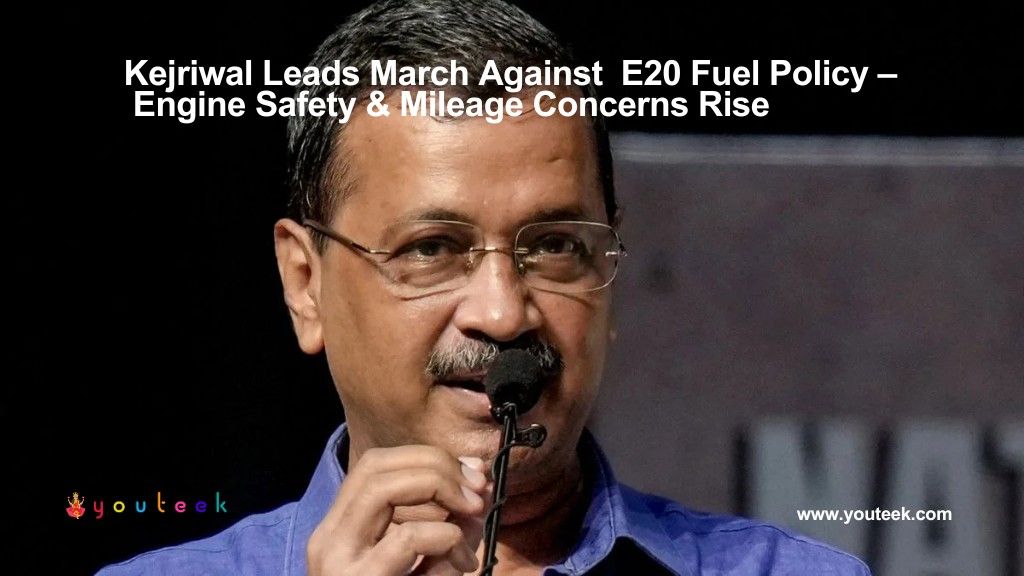
E20 Fuel Controversy has intensified after Aam Aadmi Party national convenor Arvind Kejriwal announced a protest march to the Prime Minister’s residence on 4 August 2026. The march aims to submit over two lakh public petitions against the Centre’s mandatory 20% ethanol-blended petrol policy, citing concerns over engine safety, reduced mileage, and higher vehicle maintenance costs for everyday car and bike owners.
What is E20 Fuel and Why the Controversy?
E20 is petrol blended with 20% ethanol. The government accelerated the ethanol blending programme under the National Policy on Biofuels and made higher blends widely available. Supporters say it reduces crude oil imports, supports farmers, and lowers emissions. Critics, including those driving the current E20 Fuel Controversy, argue the transition was too rapid for India’s large fleet of older vehicles designed mainly for E10 or lower blends.
Public complaints about drop in fuel efficiency and possible long-term wear on fuel systems have kept the issue alive on social media and in political debates.
Kejriwal’s Protest March and Key Demands
On 3 August 2026, Arvind Kejriwal confirmed he would lead a group of about 100 people to the Prime Minister’s residence the next day to hand over petitions signed by more than 2.33 lakh citizens. Delhi Police stated that no permission had been granted for the procession and security arrangements were being made.
The core demands in the ongoing E20 Fuel Controversy campaign are:
- Consumers should have a choice between pure petrol and E20 at fuel stations.
- E20 should be priced lower than pure petrol to offset any mileage loss.
- Overall petrol prices should be brought below ₹84 per litre.
Kejriwal has also alleged that the policy is linked to pressure to import ethanol and has called on the government to release detailed scientific studies supporting the claim that E20 does not harm vehicles.
Engine Safety and Mileage Concerns Explained
The heart of the E20 Fuel Controversy lies in two practical worries for vehicle owners: possible engine or fuel-system damage and reduced mileage.
Government statements and data shared by some manufacturers indicate that extensive testing and real-world service records have not shown widespread engine failures attributable to E20. They acknowledge a possible mileage reduction of around 3–5% in certain older vehicles originally designed for lower ethanol blends. Ethanol has a lower energy content than pure petrol, which naturally affects fuel efficiency to some extent.
Independent reports and owner experiences shared online, however, sometimes claim higher mileage drops and increased maintenance. Pre-2023 vehicles form a large share of the Indian fleet, and many owners remain cautious about long-term compatibility of rubber and metal components in the fuel system.
Centre’s Position on E20 Fuel
The Centre maintains that E20 was introduced after years of laboratory testing, field trials, and consultation with industry bodies. Officials cite service data covering crores of vehicles and state that manufacturers continue to honour warranties for vehicles using specification-compliant E20 fuel. Benefits highlighted include higher octane, cleaner combustion, and strategic gains in energy security and rural income.
The government has rejected claims of large-scale engine damage and has described many circulating social media videos as unverified or unrelated to ethanol blending.
How the E20 Fuel Controversy Affects Vehicle Owners
For everyday car and two-wheeler owners, the E20 Fuel Controversy raises practical questions about running costs and residual value of older vehicles. A modest drop in mileage increases monthly fuel expenditure. Uncertainty about long-term wear can also affect buying and selling decisions in the used-vehicle market.
Many owners simply want transparent information and the option to choose pure petrol if they prefer it. The protest march and petition drive reflect this demand for consumer choice and clearer data.
Frequently Asked Questions
What is the main issue in the E20 Fuel Controversy?
Concerns over reduced fuel efficiency, potential impact on older vehicle engines, lack of consumer choice at pumps, and calls for greater transparency on official studies.
Is E20 damaging vehicle engines?
The government and several manufacturers say there is no verified evidence of widespread engine damage. Some owners and critics report higher maintenance needs in pre-2023 vehicles.
What are Arvind Kejriwal’s demands?
Choice between pure petrol and E20, lower pricing for E20, and overall petrol prices below ₹84 per litre, along with public release of supporting scientific reports.
Will the protest march take place on 4 August 2026?
Kejriwal announced the march, but Delhi Police stated that permission had not been granted and security measures were in place.
Disclaimer: This article is for informational purposes only and summarises publicly reported statements and developments as of early August 2026. Fuel policy, protest plans, and official positions can change. Always refer to official government notifications and verified news sources for the latest updates.
Youteek: from Heritage Hues to Todays trends – Endless styles One destination Youteek! Don’t miss out—explore our exclusive styles now and find your perfect fit today. Shop the collection and upgrade your wardrobe instantly Kyuki Youteek hai to Asli hai – add to cart from our Women’s Collection, Men’s Collection, Home Decor, or Personalised Gifts.
Subscribe on Telegram | Subscribe on YouTube