
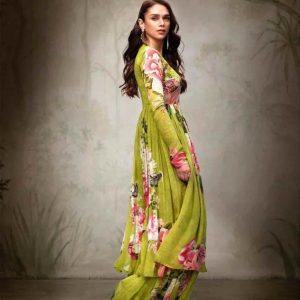
 Aditi Rao Floral Kurta Palazzo Set 2026 – Celebrity Inspired Elegance & Glamour
 Subtotal: ₹1,759.00


7 Tips to Identify a Pure Banarasi Silk Saree: Royal Buying Guide
Originating from the holy city of Varanasi, a authentic pure Banarasi silk saree is universally celebrated as a masterpiece of Indian handloom weaving. Famous for its heavy gold and silver zari brocades, Mughal-inspired floral Jaal patterns, and lustrous Katan silk texture, a true Banarasi drape embodies royal luxury fit for grand weddings and landmark celebrations.
However, with modern powerloom replicas, chemical zari, and art-silk counterfeits saturating online stores, picking a genuine pure Banarasi silk saree requires a discerning eye. In this ultimate buying guide, our master textile curators share seven essential rules to test fabric purity, inspect hand-woven zari, and select an heirloom piece that retains its value for decades.
What Makes a Pure Banarasi Silk Saree Unique?
Traditional Banarasi weaving blends indigenous Indian silk craftsmanship with Persian artistic influences. A genuine pure Banarasi silk saree is woven primarily using Katan silk—a pure mulberry silk fabric formed by twisting two silk threads together to create exceptional strength, soft texture, and a luminous sheen.

7 Tips to Identify a Pure Banarasi Silk Saree
Use these seven practical testing rules to verify authenticity before buying your luxury drape:
Tip 1: The Scientific Thread Burn Test
Extract a single loose thread from the unstitched border or pallu tassel and expose it to a flame:
- Pure Natural Silk: Burns slowly, smells distinctly like burnt human hair, stops burning when removed from the flame, and crumbles into soft, fine black ash.
- Synthetic Art Silk: Melts rapidly, smells like burning plastic, and cools into a hard, unyielding plastic bead.
Tip 2: Inspect for the Master Handloom Kadwa Weave
The most prestigious handloom technique is Kadwa (or Kadhwa), where each floral or paisley motif is individually woven into the saree using a separate spool of zari thread. On authentic Kadwa weaves, the back of the saree is smooth without long clipped thread floats, whereas machine powerlooms feature rough, laser-cut thread ends on the reverse.
Tip 3: Test Zari Authenticity (Real Silver vs. Chemical Zari)
Royal Banarasi sarees feature real zari made of pure silver wire coated with real gold electroplating. Carefully inspect the back of a main zari motif: pure silver zari displays a subtle off-white core underneath the golden shine, unlike bright orange plastic metallic film used in cheap imitations.
Tip 4: Feel the Friction Warmth of Katan Silk
Gather a fold of the silk saree and rub it vigorously between your palms for 5 to 10 seconds. Pure mulberry silk yarn generates instant organic warmth against your hands, while polyester or rayon art-silk feels slick, flat, and cold to the touch.
Tip 5: Look for Natural Weaving Variations
Because handloom artisans weave each warp and weft manually on traditional wooden pit looms, a genuine pure Banarasi silk saree exhibits tiny, subtle handloom irregularities in motif spacing or thread tension. Machine-made powerloom sarees present stiff, perfectly uniform patterns devoid of artisanal character.
Tip 6: Check the Warp Float Floats along the Selvedge
Examine the plain running edge (selvedge) of the saree. Authentic handloom Banarasis feature soft, hand-bound selvages that feel smooth against the skin, whereas machine-woven synthetic sarees feature sharp, heat-sealed plastic edges that can feel prickling along the waistline.
Tip 7: Verify Silk Mark Organisation Hallmark
Always demand the Silk Mark Organisation of India (SMOI) holographic label. This government-backed certification confirms that 100% pure natural silk was utilized in weaving the saree.
Pure Banarasi Silk vs. Synthetic Art-Silk Counterfeit
Use this feature comparison matrix to evaluate your saree before making your purchase:
| Feature | Pure Banarasi Silk Saree | Synthetic Art-Silk Powerloom |
|---|---|---|
| Base Yarn | 100% Pure Mulberry Katan Silk | Viscose, Polyester, or Rayon |
| Weave Method | Hand-loomed Kadwa / Fekwa technique | Machine powerloom continuous weave |
| Zari Quality | Silver wire electroplated with gold (Tested / Real Zari) | Plastic metallized polyester film |
| Burn Test | Burnt hair odor, leaves soft black ash | Melts rapidly, chemical smell, forms hard bead |
| Underside Finish | Smooth Kadwa back without scratchy thread ends | Laser-clipped, rough thread floats |
Styling Your Pure Banarasi Saree for Bridal Wear
Pairing a grand pure Banarasi silk saree with a tailored brocade blouse, heavy uncut polki choker set, and a sleek low hair bun adorned with fresh roses creates a timeless royal aesthetic.
If you are building your trousseau with regional heritage weaves, compare this rich brocade style with our buying guides on the heavy pure Kanjivaram silk saree for South Indian weddings, or explore weightless options like the pure silk organza saree for daytime festivities.
Shop Handcrafted Pure Silks at Youteek
At Youteek, every saree in our boutique is curated directly alongside master weaving families in Varanasi and traditional handloom hubs. Explore our verified pure saree collection to discover Silk Mark certified drapes, or browse our main handloom saree catalog for regional festive wear.
Frequently Asked Questions
How can I tell if a Banarasi silk saree is real pure silk?
Perform a thread burn test on a loose edge thread. Pure mulberry silk burns slowly with the smell of burnt hair and leaves fine soft black ash, whereas synthetic art-silk melts quickly into hard plastic beads.
What is the Kadwa technique in a pure Banarasi silk saree?
Kadwa is an elaborate handloom technique where each motif is woven individually into the fabric using a separate spool. Unlike printed or machine-cut weaves, there are no loose thread floats on the reverse side.
What is the difference between Katan silk and Organza Banarasi silk?
Katan silk is woven using pure twisted mulberry silk threads creating a smooth, heavy, lustrous fabric ideal for grand bridal wear, while Organza Banarasi silk uses high-twist fine threads to create a crisp, sheer drape.