
 Aluminium Laptop Stand 2026 | Adjustable Ergonomic Foldable Riser | Youteek
 Subtotal: ₹300.00

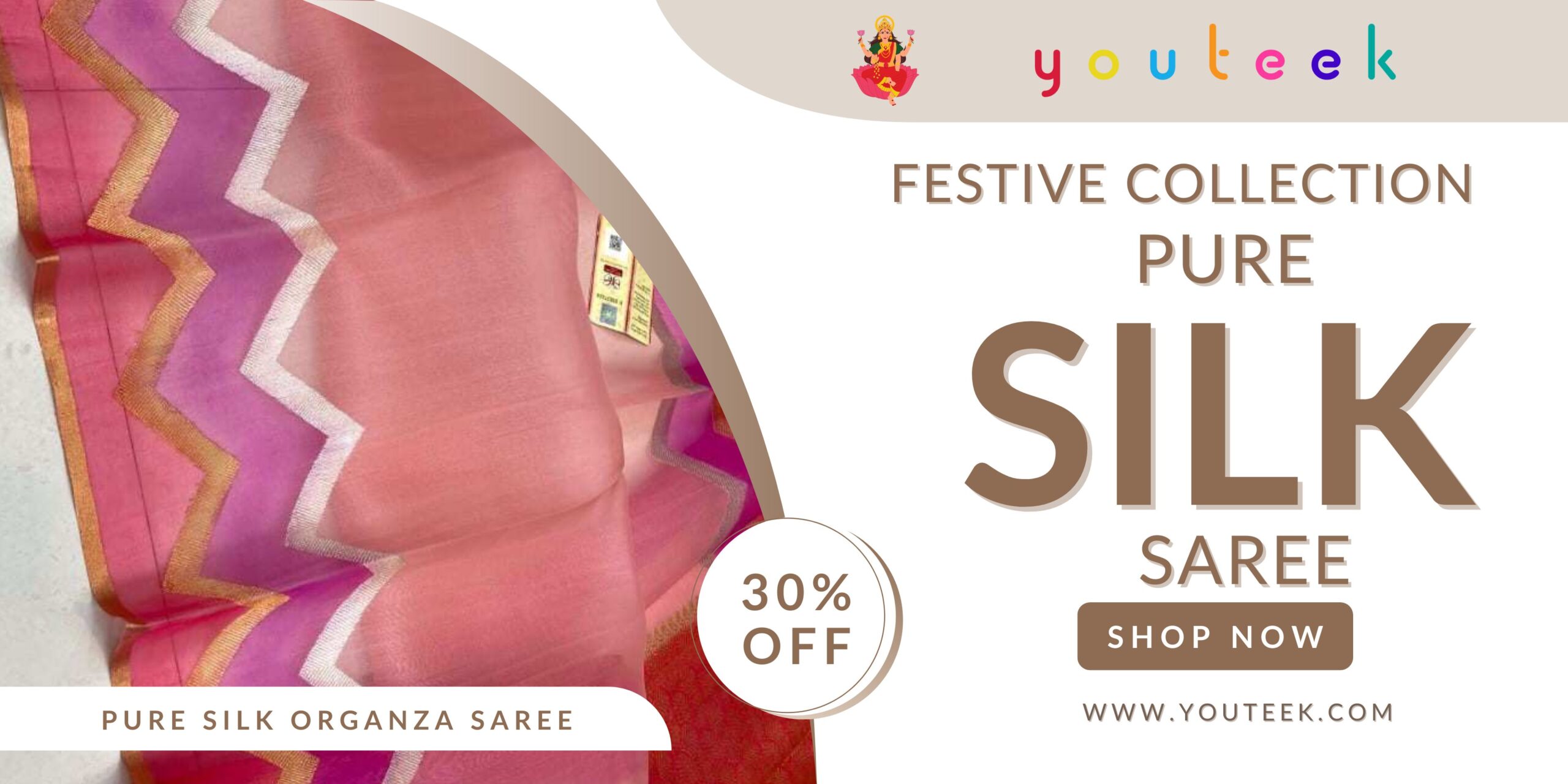
6 Secrets to Styling a Pure Silk Organza Saree: Complete Buyer Guide
Few ethnic drapes capture delicate glamour quite like a pure silk organza saree. Renowned for its sheer transparency, crisp structure, and weightless fall, organza has evolved from a vintage royal textile into a modern wardrobe essential for contemporary bridesmaids and festive connoisseurs. However, as demand rises, synthetic glass-organza and polyester blends have flooded the market, making it essential to understand how to spot true handloom quality.
Whether you are drawn to delicate hand-painted floral motifs, hand-embroidered gota patti borders, or minimalist pastel weaves, selecting a authentic pure silk organza saree guarantees a drape that holds its shape without feeling stiff or plastic. In this comprehensive guide, our master textile curators share essential insights on weave verification, drape techniques, and maintenance care.
1. What Makes a Pure Silk Organza Saree Unique?
Unlike conventional fluid silks like chiffon or georgette, a pure silk organza saree is crafted by weaving high-twist continuous filament mulberry silk yarns in a loose, open plain weave. This specialized tension creates a firm finish and natural crispness while maintaining complete fabric transparency.
Key Characteristics of Authentic Silk Organza
- Subtle Metallic Sheen: Natural silk fibers refract light softly, preventing the harsh artificial reflection common in nylon organza.
- Crisp Structure with Light Weight: The fabric holds structured pleats effortlessly while remaining remarkably light on the body.
- Artisanal Canvas: The flat, sheer surface of a pure silk organza saree serves as a canvas for fine zari embroidery, chikankari, and hand-painted floral art.

2. How to Test for Pure Silk Organza Quality
To make sure you are purchasing authentic silk rather than synthetic polyester organza, test your garment using these three practical guidelines:
1. The Touch and Sound Test
Gather a section of the saree in your hands and rustle it softly. A genuine pure silk organza saree produces a soft, organic rustle and feels smooth against the skin. Synthetic organza makes a loud metallic crinkle sound and often feels prickly along cut edges.
2. The Thread Burn Test
Extract a single loose thread from the unstitched edge of the saree border and ignite it:
- Pure Silk Organza: Burns slowly, smells like burnt hair, and crumbles instantly into fine black ash.
- Polyester Organza: Melts rapidly, smells of synthetic chemicals, and leaves behind hard plastic beads.
3. Check for Silk Mark Verification
Always confirm that your drape carries the official tag from the Silk Mark Organisation of India (SMOI). This hallmark ensures that the warp and weft filaments are 100% natural silk.
3. Pure Silk Organza vs. Synthetic Glass Organza
Use this reference table to evaluate fabric differences before buying:
| Feature | Pure Silk Organza Saree | Synthetic Glass Organza |
|---|---|---|
| Yarn Origin | 100% Mulberry Silk Filaments | Polyester or Nylon Filaments |
| Lustre | Soft, organic prism-like glow | High, harsh glass reflection |
| Drape & Feel | Soft crispness, comfortable skin touch | Stiff, scratchy along borders |
| Breathability | High (Natural organic fiber) | Low (Traps moisture) |
| Burn Test | Burnt hair odor, leaves soft ash | Melts into hard plastic bead |
4. Styling Tips for a Pure Silk Organza Saree
Because organza is sheer and structured, styling it properly enhances its natural volume:
- Blouse Selection: Pair your organza drape with a tailored raw silk, satin, or embroidered blouse. Sleeveless or halter-neck cuts balance the voluminous drape of the pallu.
- Petticoat Choice: Wear a seamless satin or satin-lycra petticoat in an exact color match to maintain the sleek silhouette underneath the transparent fabric.
- Jewelry Pairing: Complement pastel organza drapes with pearl chokers, uncut diamond (polki) earrings, or delicate floral jewelry for daytime events.
5. Maintenance Guide: How to Store Organza Sarees
To preserve the crisp texture of your pure silk organza saree without causing creases or thread damage:
- Dry Clean Only: Never submerge silk organza in water, as moisture disrupts the natural sizing of the silk fibers.
- Hanger Storage: Hang organza sarees on padded coat hangers inside a cotton garment bag instead of folding them tightly to prevent creasing.
- Low Heat Ironing: Iron on the reverse side using a cool silk setting with a clean press cloth placed between the iron and the fabric.
6. Shop Certified Pure Silk Organza at Youteek
At Youteek, every piece in our collection is curated alongside skilled weavers and textile artisans. Explore our dedicated pure saree collection to find Silk Mark certified organza and handloom drapes, or browse our broader handloom saree category for classic festive options.
Frequently Asked Questions
How can I tell if an organza saree is made of pure silk?
A pure silk organza saree is woven using tightly twisted 100% natural silk yarns. Perform a thread burn test: pure silk burns slowly, smells like burnt hair, and leaves soft ash, whereas synthetic glass organza melts quickly into hard plastic beads.
Is a pure silk organza saree suitable for summer weddings?
Yes, pure silk organza is exceptionally lightweight, sheer, and breathable. Because it is crafted from organic protein fibers, it offers superior air circulation compared to synthetic polyester organza.
How should I drape a stiff pure silk organza saree?
Iron the saree on a low silk setting using a press cloth beforehand. Keep your pleats broad and secure them internally with safety pins. You can leave the pallu floating open across your arm to showcase the sheer fabric.
Also read https://youteek.com/pure-kanjivaram-silk-saree-buying-guide/