

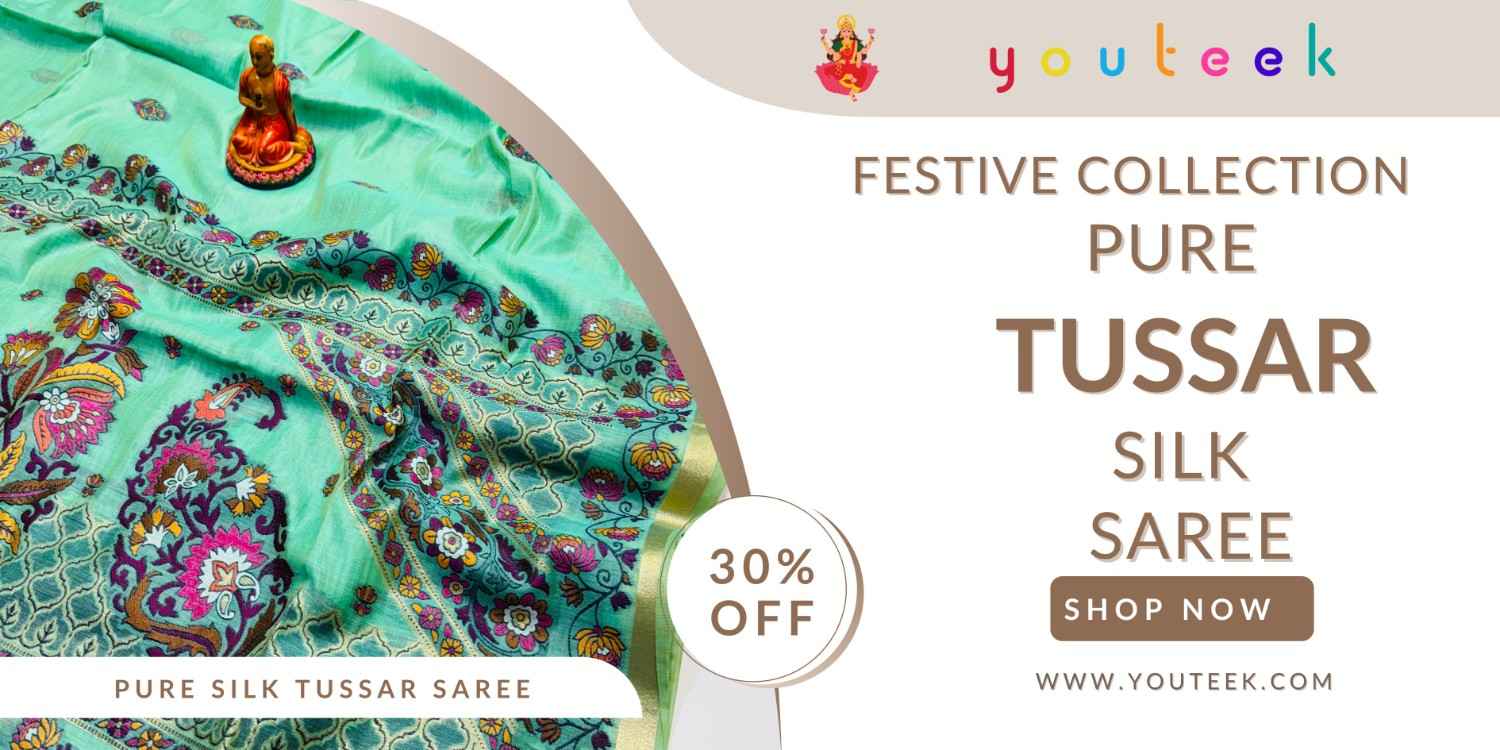
7 Tips to Identify a Pure Tussar Silk Saree: Wild Silk Buying Guide
Renowned for its earthy elegance, natural dull-gold luster, and rich slub texture, an authentic pure Tussar silk saree (often called Kosa silk) holds a revered place in Indian handloom heritage. Harvested from wild forest silkworms across Bihar, Jharkhand, and Chhattisgarh, Tussar silk represents sustainable, eco-friendly luxury with an unmistakable organic appeal.
However, with synthetic art-silks, printed polyester blends, and chemically finished imitations flooding the online marketplace, finding a true handwoven pure Tussar silk saree demands close inspection. In this detailed buying guide, our textile craft team shares seven essential rules to test wild silk purity, evaluate natural fiber texture, and choose an authentic piece for your wardrobe.
What Makes a Pure Tussar Silk Saree Unique?
Unlike cultivated Mulberry silk which produces long, smooth, uniform threads, a pure Tussar silk saree is woven from wild silkworm Cocoons (Antheraea paphia). These natural wild filaments contain high tannin levels, yielding a natural tawny, dull-gold shade and a distinct coarse, uneven texture known as “slub lines.” This breathability and organic texture make Tussar ideal for formal winter events and refined daytime gatherings.

7 Tips to Identify a Pure Tussar Silk Saree
Use these seven practical testing steps to evaluate authenticity before buying:
Tip 1: Perform the Scientific Thread Burn Test
Gently extract a single loose thread from the unstitched edge or tassels and expose it to a flame:
- Pure Wild Tussar Silk: Burns slowly, smells distinctly like burnt hair, extinguishes instantly when removed from fire, and crumbles into soft, dark ash.
- Synthetic Polyester or Rayon: Melts rapidly, smells like chemical plastic, and leaves behind a hard, unyielding plastic bead.
Tip 2: Inspect for Organic Slub Lines and Texture
Examine the surface under natural light. A real pure Tussar silk saree exhibits visible, uneven horizontal slub lines (natural fiber ridges) running across the weave. Synthetic replicas produced on high-speed powerlooms are unnaturally flat, completely uniform, and smooth to the touch.
Tip 3: Look for the Natural Honey-Gold Undertone
Undyed or naturally dyed Tussar silk carries an unmistakable warm, brownish-gold or honey hue derived from wild cocoon tannins. If an “un-dyed” Tussar saree appears bright stark white or bleached silver, it is likely a synthetic blend or heavily chemically treated fiber.
Tip 4: Check for Handloom Weaving Irregularities
Traditional Tussar sarees are hand-woven on wooden pit looms. Look closely at the selvedge (edges) and motifs for minor, subtle handloom variations in yarn tension. Machine-made powerloom counterfeits display perfectly uniform, rigid edges lacking human weaving touch.
Tip 5: Feel the Friction Warmth of Organic Protein
Rub a fold of the Tussar fabric briskly between your palms for 5 to 10 seconds. Pure natural wild silk is a natural protein insulator that generates immediate, gentle warmth against your hands, unlike cool, slick polyester or art-silk.
Tip 6: Test Drapability and Matte-Gold Sheen
Authentic Tussar silk features a sophisticated matte sheen rather than a blinding glossy shine. The fabric holds a crisp, noble structure that drapes with rich volume without feeling stiff or plastic.
Tip 7: Verify Official Silk Mark Certification
Always demand the Silk Mark Organisation of India (SMOI) hallmark tag. This label guarantees that 100% genuine natural silk was used in both the warp and weft of the saree.
Pure Tussar Silk vs. Synthetic Art-Tussar Replica
Use this feature comparison matrix to evaluate your saree before buying:
| Feature | Pure Tussar Silk Saree | Synthetic Art-Tussar Powerloom |
|---|---|---|
| Yarn Source | 100% Wild Antheraea Silkworm Cocoons | Viscose, Polyester, or Mercerized Cotton |
| Texture & Feel | Earthy slub texture with rich, natural body | Slippery, slick, or artificial uniform weave |
| Luster | Subtle, natural dull-gold matte sheen | High synthetic shine or dull plastic finish |
| Burn Test | Burnt hair odor, crumbles into soft black ash | Melts fast, chemical odor, forms hard plastic bead |
| Care Requirement | Strictly dry clean to preserve sheen and structure | Machine washable synthetic fabric |
Styling Your Pure Tussar Saree for Formal Occasions
Pairing an organic pure Tussar silk saree with oxidized silver jewelry, Kantha-embroidered blouses, or terracotta neckpieces creates an understated, sophisticated aesthetic that stands out at festive dinners and gallery openings.
If you are building a diverse collection of regional handlooms, compare this earthy wild silk weave with heavy bridal options like our pure Banarasi silk saree buying guide, or lightweight summer handlooms like the pure Chanderi silk saree.
Shop Certified Pure Silks at Youteek
At Youteek, every wild silk saree in our catalog is handpicked directly from certified weaver societies in Eastern and Central India. Explore our verified pure saree collection to find Silk Mark certified drapes, or check our broader handloom saree catalog for festive drapes.
Frequently Asked Questions
How can I tell if a Tussar silk saree is real pure wild silk?
Perform a thread burn test on a loose thread. Pure Tussar silk burns slowly with the distinct smell of burnt hair and leaves fine soft black ash, whereas synthetic polyester imitations melt rapidly into hard plastic beads.
Why is Tussar silk textured differently than Mulberry silk?
Tussar silk (also known as Kosa silk) is produced by wild silkworms feeding on Terminalia trees in central India. Its natural wild fibers are shorter and coarser, giving the fabric its famous rich, dull-gold textured feel.
Does pure Tussar silk shrink after washing?
Pure handwoven Tussar silk can lose its structural shape or shrink if washed in water. It should always be dry cleaned to preserve its natural golden sheen, crisp hand feel, and dye vibrancy.